Best Home Gym Machine Online Store: Can Digital Resistance Really Replace Traditional Weights?
HONG KONG, HONG KONG, CHINA, September 17, 2026 /EINPresswire.com/ -- If you’ve been comparing home gym setups lately, you’ve probably come across a growing debate: can digital resistance match the effectiveness of traditional weight stacks and free weights? It’s a fair question. For decades, building muscle at home meant dedicating an entire room to a bulky cable machine or accumulating a collection of dumbbells and barbells that take up floor space and gather dust between workouts. Digital resistance systems offer a different approach—one that replaces physical weight plates with servo-motor-controlled resistance controlled by software. The question isn’t whether they’re different, but whether that difference matters for the way you train.
The answer depends on what you value in a workout. If your goal is progressive overload, exercise variety, and measurable progress, a digital system can deliver results that are comparable to traditional equipment in several important ways. Whether you are setting up your first home gym or upgrading from a basic set of adjustable dumbbells, the following four factors determine whether a digital resistance home gym machine is the right fit for your training needs:
Resistance range and progressive overload — can the system provide enough resistance for compound lifts like squats and deadlifts, and does it allow for small, consistent increments to support long-term strength gains?
Exercise variety and range of motion — how many different exercises can you perform, and does the setup allow for the same natural movement patterns as free weights or cable machines?
Space efficiency and setup flexibility — how much floor space does the system require, and does it integrate into a living space without dominating the room?
Tracking, data, and long-term motivation — does the system help you stay consistent through progress tracking, guided workouts, and real-time feedback that traditional equipment cannot offer?
Resistance That Matches Your Strength Level
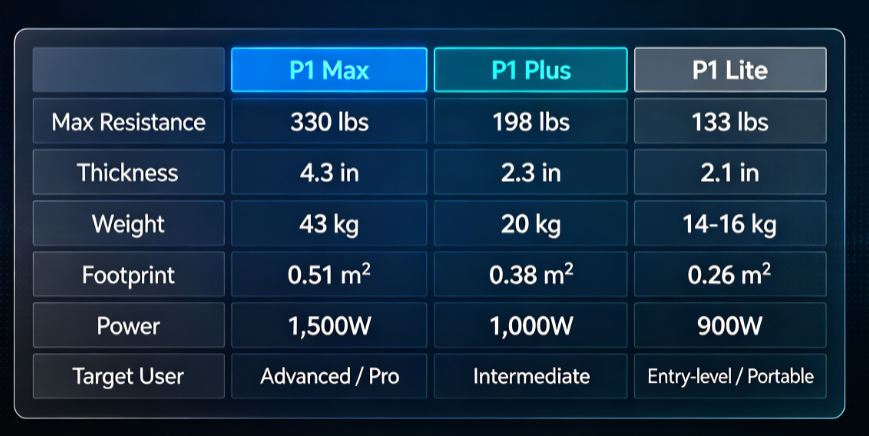
The most common concern about digital resistance is whether it provides enough weight for serious strength training. Traditional weight stacks typically range from 150 to 250 pounds, while a set of adjustable dumbbells might top out at 100 pounds per hand. Innodigym’s P1 Max delivers up to 330 pounds of adjustable digital resistance, which covers the strength range of most intermediate and advanced lifters for compound movements like bench presses, squats, and rows. The P1 Plus provides 198 pounds, suitable for users who train primarily in the moderate-to-heavy range. Both systems use a PMSM servo motor that automatically lowers the resistance when you reach muscle fatigue, helping you complete your full training plan. For lighter training days or beginners, the P1 Lite offers 133 pounds at a significantly lower price point, making digital resistance accessible without requiring a large upfront investment.
Exercise Variety Without Equipment Changes
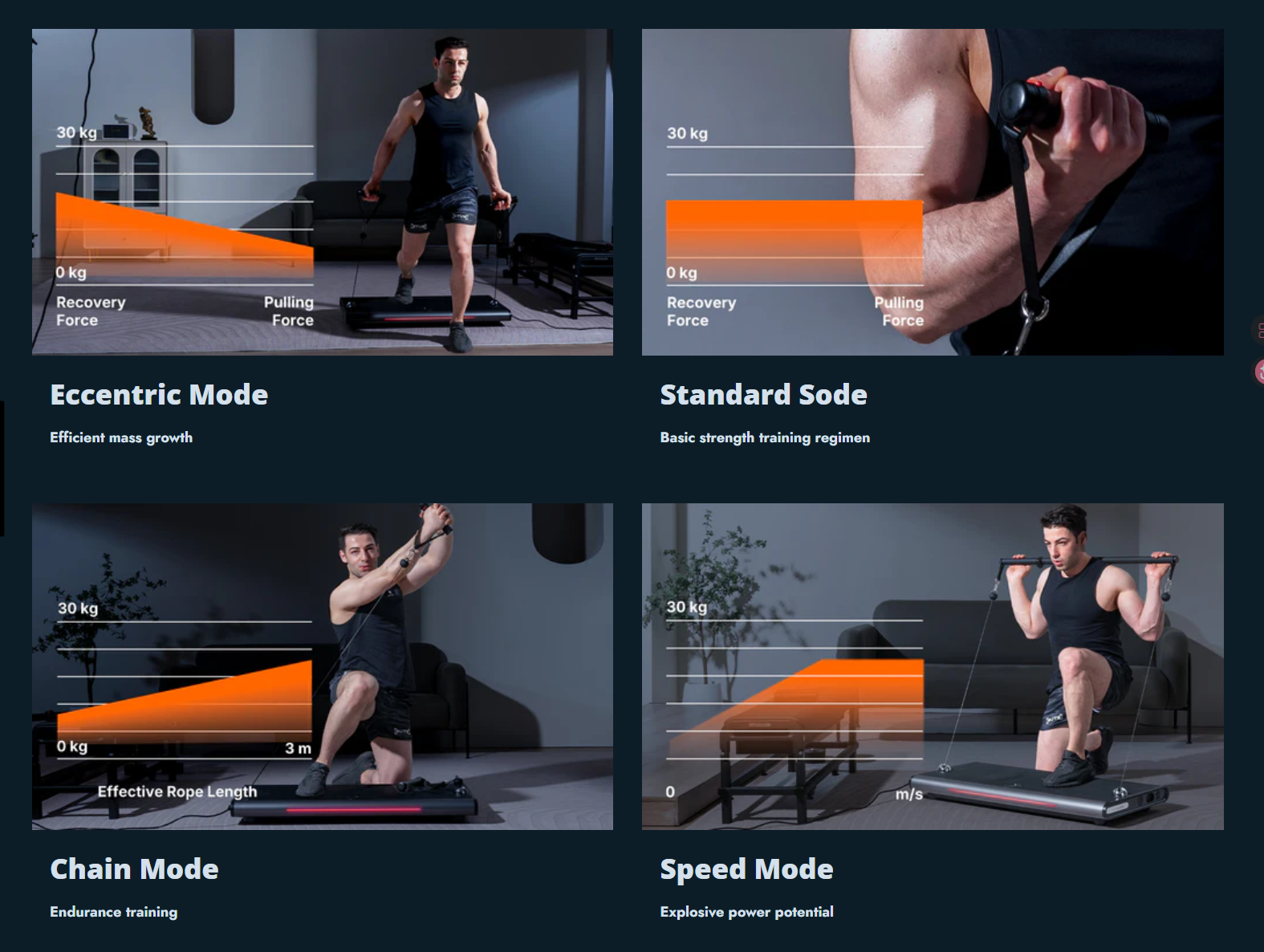
One limitation of traditional home gyms is the number of exercises you can perform with the equipment you own. A pair of dumbbells covers the basics, but achieving the variety needed for balanced muscle development often requires multiple accessories—a bench, a pull-up bar, bands, and sometimes a cable attachment. Digital resistance systems address this by bundling the functionality of several machines into a single device. Innodigym’s P1 series supports over 200 exercises through its accessory set, which includes smart handles, a long bar, ankle straps, a belt attachment, and an adjustable bench. The four training modes—standard, eccentric, chain, and speed—add further variety by changing how the resistance behaves during each rep. The eccentric mode increases resistance during the lowering phase, which research consistently identifies as a key driver of muscle growth. The chain mode increases resistance as you extend, mimicking the loading pattern of barbell chains used in powerlifting gyms.
Space Efficiency for Modern Homes
Floor space is the limiting factor in most home gym decisions. A traditional cable machine occupies roughly 15 to 20 square feet. A power rack with a barbell and weight plates can take up twice that. Digital resistance systems change this equation entirely. The Innodigym P1 Plus measures 2.3 inches thick and covers 0.38 square meters of floor space—roughly the size of a large yoga mat. The P1 Lite can also be wall-mounted using accessories, taking up even less floor space. This compact footprint means you can have a full strength-training setup in a corner of your bedroom, living room, or apartment hallway, and store it out of sight after your workout. Detailed specifications for Innodigym’s full product range are available at the best home gym machine product page.
Tracking Progress Without Guesswork
One advantage that digital resistance has over traditional weights is the quality of training data it provides. When you lift with free weights or a weight stack, your progress is measured by what you write in a notebook or log in an app manually. Digital systems record every rep, set, and rest period automatically, giving you a clear picture of what’s working. Innodigym’s free companion app tracks strength gains, endurance improvements, and workout volume over time, presenting the data in charts that make it easy to spot plateaus and adjust your training. The app includes over 100 guided exercises and 20 professionally designed training programs, all included with no subscription fee—a significant difference from several other smart gym platforms that charge monthly access fees for the same features.
The practical difference between digital resistance and traditional weights comes down to daily convenience. A traditional setup requires you to change plates, adjust pin positions, or swap dumbbells between exercises. These small interruptions add up over the course of a training session and can slow your pace, especially during circuit-style workouts or supersets. A digital system lets you switch between exercises with a tap on your phone—it automatically adjusts resistance, reduces the load when you reach muscle failure, and logs every workout. For someone training at home before work or during a lunch break, the time saved per session translates into more consistent training over the long term.
Resistance range, exercise variety, space footprint, and training data are the four factors that determine whether a digital resistance home gym machine can replace traditional weights for your specific situation. Innodigym’s P1 series addresses each of these dimensions with a range of models that span from the compact P1 Lite (133 pounds, 0.26 square meters) to the full-featured P1 Max (330 pounds, 0.51 square meters), all backed by 84 patents and a free training app that requires no subscription. The system’s 4-in-1 resistance design and multi-accessory setup ensure that you can build a balanced, effective training routine without dedicating an entire room to your gym. Innodigym official website.
Ready to compare digital resistance to traditional weights for yourself? Visit the official Innodigym website at https://www.innodigym.com/ for detailed product specifications, pricing, and current offers. Questions about which model fits your training level can be directed to the support team through the website.
The answer depends on what you value in a workout. If your goal is progressive overload, exercise variety, and measurable progress, a digital system can deliver results that are comparable to traditional equipment in several important ways. Whether you are setting up your first home gym or upgrading from a basic set of adjustable dumbbells, the following four factors determine whether a digital resistance home gym machine is the right fit for your training needs:
Resistance range and progressive overload — can the system provide enough resistance for compound lifts like squats and deadlifts, and does it allow for small, consistent increments to support long-term strength gains?
Exercise variety and range of motion — how many different exercises can you perform, and does the setup allow for the same natural movement patterns as free weights or cable machines?
Space efficiency and setup flexibility — how much floor space does the system require, and does it integrate into a living space without dominating the room?
Tracking, data, and long-term motivation — does the system help you stay consistent through progress tracking, guided workouts, and real-time feedback that traditional equipment cannot offer?
Resistance That Matches Your Strength Level
The most common concern about digital resistance is whether it provides enough weight for serious strength training. Traditional weight stacks typically range from 150 to 250 pounds, while a set of adjustable dumbbells might top out at 100 pounds per hand. Innodigym’s P1 Max delivers up to 330 pounds of adjustable digital resistance, which covers the strength range of most intermediate and advanced lifters for compound movements like bench presses, squats, and rows. The P1 Plus provides 198 pounds, suitable for users who train primarily in the moderate-to-heavy range. Both systems use a PMSM servo motor that automatically lowers the resistance when you reach muscle fatigue, helping you complete your full training plan. For lighter training days or beginners, the P1 Lite offers 133 pounds at a significantly lower price point, making digital resistance accessible without requiring a large upfront investment.
Exercise Variety Without Equipment Changes
One limitation of traditional home gyms is the number of exercises you can perform with the equipment you own. A pair of dumbbells covers the basics, but achieving the variety needed for balanced muscle development often requires multiple accessories—a bench, a pull-up bar, bands, and sometimes a cable attachment. Digital resistance systems address this by bundling the functionality of several machines into a single device. Innodigym’s P1 series supports over 200 exercises through its accessory set, which includes smart handles, a long bar, ankle straps, a belt attachment, and an adjustable bench. The four training modes—standard, eccentric, chain, and speed—add further variety by changing how the resistance behaves during each rep. The eccentric mode increases resistance during the lowering phase, which research consistently identifies as a key driver of muscle growth. The chain mode increases resistance as you extend, mimicking the loading pattern of barbell chains used in powerlifting gyms.
Space Efficiency for Modern Homes
Floor space is the limiting factor in most home gym decisions. A traditional cable machine occupies roughly 15 to 20 square feet. A power rack with a barbell and weight plates can take up twice that. Digital resistance systems change this equation entirely. The Innodigym P1 Plus measures 2.3 inches thick and covers 0.38 square meters of floor space—roughly the size of a large yoga mat. The P1 Lite can also be wall-mounted using accessories, taking up even less floor space. This compact footprint means you can have a full strength-training setup in a corner of your bedroom, living room, or apartment hallway, and store it out of sight after your workout. Detailed specifications for Innodigym’s full product range are available at the best home gym machine product page.
Tracking Progress Without Guesswork
One advantage that digital resistance has over traditional weights is the quality of training data it provides. When you lift with free weights or a weight stack, your progress is measured by what you write in a notebook or log in an app manually. Digital systems record every rep, set, and rest period automatically, giving you a clear picture of what’s working. Innodigym’s free companion app tracks strength gains, endurance improvements, and workout volume over time, presenting the data in charts that make it easy to spot plateaus and adjust your training. The app includes over 100 guided exercises and 20 professionally designed training programs, all included with no subscription fee—a significant difference from several other smart gym platforms that charge monthly access fees for the same features.
The practical difference between digital resistance and traditional weights comes down to daily convenience. A traditional setup requires you to change plates, adjust pin positions, or swap dumbbells between exercises. These small interruptions add up over the course of a training session and can slow your pace, especially during circuit-style workouts or supersets. A digital system lets you switch between exercises with a tap on your phone—it automatically adjusts resistance, reduces the load when you reach muscle failure, and logs every workout. For someone training at home before work or during a lunch break, the time saved per session translates into more consistent training over the long term.
Resistance range, exercise variety, space footprint, and training data are the four factors that determine whether a digital resistance home gym machine can replace traditional weights for your specific situation. Innodigym’s P1 series addresses each of these dimensions with a range of models that span from the compact P1 Lite (133 pounds, 0.26 square meters) to the full-featured P1 Max (330 pounds, 0.51 square meters), all backed by 84 patents and a free training app that requires no subscription. The system’s 4-in-1 resistance design and multi-accessory setup ensure that you can build a balanced, effective training routine without dedicating an entire room to your gym. Innodigym official website.
Ready to compare digital resistance to traditional weights for yourself? Visit the official Innodigym website at https://www.innodigym.com/ for detailed product specifications, pricing, and current offers. Questions about which model fits your training level can be directed to the support team through the website.
NNODIGYM INTERNATIONAL LIMITED
+ +86 18850181032
email us here
Visit us on social media:
Instagram
Facebook
YouTube
TikTok
Other
Legal Disclaimer:
EIN Presswire provides this news content "as is" without warranty of any kind. We do not accept any responsibility or liability for the accuracy, content, images, videos, licenses, completeness, legality, or reliability of the information contained in this article. If you have any complaints or copyright issues related to this article, kindly contact the author above.