

Top Ethanol Extraction Machine Manufacturer Advances Innovative Extraction Solutions
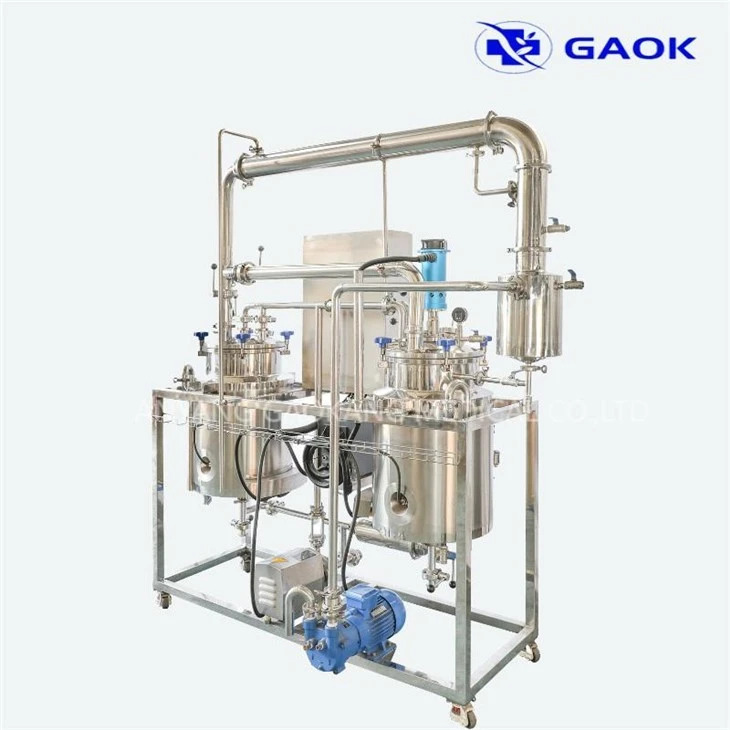
Ethanol Extraction Machine
ANYANG, HENAN, CHINA, October 10, 2026 /EINPresswire.com/ -- As demand grows for efficient, reliable, and adaptable extraction technologies across the pharmaceutical, food, natural ingredients, and chemical processing industries, equipment manufacturers are placing greater emphasis on process control, product quality, and production flexibility. Anyang Gaokang Medical Co., Ltd. is a Chinese equipment manufacturer serving these needs through the development and production of extraction systems and related processing machinery. With a product portfolio spanning ethanol extraction, supercritical extraction, subcritical extraction, concentration, and separation equipment, the company supports laboratories, research institutions, and industrial users seeking practical solutions for processing valuable materials.
Extraction technology plays a central role in recovering target compounds from botanical materials, food ingredients, oils, and other raw materials. The performance of an extraction system can influence yield, purity, operating costs, and the consistency of the final product. For manufacturers, selecting the right equipment involves more than comparing capacity or price. Factors such as solvent selection, temperature management, pressure control, material compatibility, ease of cleaning, and downstream separation must all be considered. These priorities are encouraging equipment suppliers to provide more integrated systems and customized process solutions.
Responding to these requirements, Anyang Gaokang Medical Co., Ltd. offers equipment for different extraction principles and production scales. Its broader range includes ethanol extraction machines, supercritical CO2 extraction systems, subcritical extraction equipment, distillation units, and other processing machinery. This variety allows buyers to assess extraction technologies according to the characteristics of their raw materials, the properties of the compounds they want to recover, and their intended production workflow.
Understanding the Role of Modern Extraction Equipment
Extraction is used to separate selected components from a complex material. In industries that process herbs, plant oils, natural flavors, pharmaceutical ingredients, and functional food materials, the chosen method can affect both processing efficiency and the characteristics of the resulting extract.
Ethanol extraction is widely used because ethanol can dissolve a broad range of compounds and can be recovered through suitable downstream processing. Depending on the material and production objective, the process may involve soaking, circulation, filtration, concentration, and solvent recovery. A properly configured extraction line can help manufacturers manage these stages more consistently while reducing unnecessary handling.
However, ethanol is not the only option for every application. Some materials may benefit from carbon dioxide-based extraction, while other processes may use water or alternative solvents under controlled conditions. Each approach has its own operating requirements and technical trade-offs. As a result, buyers increasingly evaluate equipment based on the complete process rather than a single machine specification.
For companies supplying extraction machinery, this creates demand for engineering knowledge alongside manufacturing capability. Equipment configuration, process parameters, vessel design, and separation arrangements may all need to be adapted to a customer's material and production goals. Anyang Gaokang Medical Co., Ltd. positions its business around chemical equipment research and development, manufacturing, and process customization, serving users in areas including fine chemicals, pharmaceuticals, plant extracts, and biological preparations.
Supporting Process Flexibility With Multiple Technologies
A key consideration for extraction facilities is the ability to select a suitable technology for each target compound. Raw materials vary in composition, moisture content, particle size, and sensitivity to heat or oxidation. A method that performs well for one material may be less appropriate for another.
This is why manufacturers and research teams often compare conventional solvent extraction with alternative methods before finalizing an equipment investment. Ethanol-based systems can be useful for processes in which ethanol provides the required solvent properties, while supercritical and subcritical technologies offer different ways to manage extraction conditions and solvent behavior.
Equipment suppliers that understand these differences can help customers assess the relationship between extraction conditions, downstream concentration, and product handling. A well-designed system should fit the required workflow, from loading and extraction through separation, solvent recovery, cleaning, and collection of the finished material.
Anyang Gaokang Medical Co., Ltd. supplies equipment across several of these process categories. Its range includes the Supercritical CO2 Extractor and the Subcritical Water Extractor, providing buyers with additional technology options when evaluating extraction and separation requirements. These products are part of a broader equipment offering intended for different materials, applications, and production scales.
Supercritical CO2 Extractor: Controlled Extraction for Sensitive Materials
The Supercritical CO2 Extractor uses carbon dioxide under controlled pressure and temperature conditions to achieve a supercritical state. In this state, carbon dioxide exhibits properties that allow it to penetrate materials while dissolving selected compounds. By adjusting operating conditions, users can influence extraction selectivity and the behavior of target substances.
One reason supercritical carbon dioxide attracts attention is its potential to reduce reliance on conventional organic solvents in certain applications. Carbon dioxide can be separated from extracted materials by changing pressure and temperature, and systems can be designed to recover and recirculate the gas. The practical benefits depend on the equipment configuration, process parameters, and material being processed, but the approach can be valuable when solvent residue, product purity, or selective extraction is a priority.
Potential application areas include botanical ingredients, essential oils, flavors, natural compounds, and research into specialized materials. The technology may also be considered for processes involving heat-sensitive components, although the appropriate temperature and pressure range must be established for each application. For commercial operations, users must assess vessel capacity, pressure ratings, pump performance, separator configuration, instrumentation, and safety features before choosing a system.
The Supercritical CO2 Extractor offered by Anyang Gaokang Medical Co., Ltd. is relevant to customers investigating carbon dioxide-based extraction for laboratory research, pilot production, or larger processing requirements. Depending on the project, system selection may involve discussion of the raw material, target compounds, expected throughput, and required separation performance.
Because supercritical extraction operates at elevated pressure, equipment design and operation require particular attention to engineering standards, inspection, operating procedures, and protective systems. Training and process validation are also important for facilities seeking repeatable results. When integrated into a suitable production workflow, supercritical technology can give users another option for developing extraction processes that balance product quality, efficiency, and solvent management.
Subcritical Water Extractor: An Alternative Approach to Extraction
The Subcritical Water Extractor represents another technology category for users investigating alternatives to conventional extraction methods. In general technical usage, subcritical water extraction involves water maintained at elevated temperatures while remaining under sufficient pressure to keep it in a liquid state. Under these conditions, water's solvent properties change, potentially allowing it to extract compounds that are less readily recovered with water at ordinary temperatures.
This approach has attracted research interest in natural product processing and other applications where water-based extraction may offer advantages. Its suitability depends on the material, target compounds, thermal stability, pressure requirements, and desired composition of the final extract. Not every material is appropriate for subcritical water treatment, so laboratory testing and process development are important steps before moving to larger-scale production.
For industrial users, an extraction system must be evaluated as part of a complete process. The extraction vessel, temperature and pressure controls, circulation arrangement, filtration, and downstream concentration or separation equipment can all affect performance. Materials of construction and cleaning procedures are also important, particularly in applications with strict hygiene or contamination-control requirements.
Anyang Gaokang Medical Co., Ltd. includes the Subcritical Water Extractor in its extraction equipment portfolio, giving prospective customers an additional option to investigate when comparing processing technologies. Buyers can consider this equipment in relation to their specific raw materials and desired outcomes, with technical discussions helping establish whether the method is appropriate for their application.
The product name alone should not be taken as a substitute for reviewing the actual process configuration. In extraction equipment markets, buyers should confirm the working medium, operating range, vessel capacity, and process flow for the particular model under consideration. This is especially important because equipment terminology can vary between suppliers and some systems marketed within the broader subcritical extraction category may use different solvents or operating principles. Clear technical specifications help ensure that the selected machine matches the intended process.
The Importance of Customization and System Integration
An extraction machine rarely operates in isolation in a commercial facility. Depending on the application, a production line may also require material preparation, filtration, evaporation, distillation, drying, and packaging equipment. Coordination between these stages can influence product recovery, production time, energy consumption, and the ease of routine operation.
For this reason, buyers often look for suppliers capable of discussing the entire process rather than providing only a standalone vessel. An equipment project may begin with a small research unit and later expand into pilot or production capacity. Alternatively, an established plant may need to improve a specific stage without replacing its complete processing line.
Anyang Gaokang Medical Co., Ltd. states that it combines equipment research and development with manufacturing and process customization. Its wider portfolio includes extraction machinery, molecular distillation equipment, thin-film evaporators, reaction kettles, vacuum distillation systems, spray dryers, and other process equipment. Such a range can be relevant when customers need to coordinate extraction with concentration, purification, or drying operations.
Customization can involve selecting suitable capacities, defining operating parameters, planning equipment connections, and adapting the system to a customer's material and site requirements. The details depend on the project and should be confirmed through technical review. Before purchasing, industrial buyers are advised to clarify expected throughput, batch size, solvent recovery needs, utility requirements, cleaning arrangements, automation level, and applicable local standards.
Quality Management, Technical Support, and Long-Term Value
In extraction equipment procurement, initial purchase cost is only one element of total ownership cost. Reliability, maintenance requirements, spare parts, operator training, energy use, and technical support can all influence the value of an investment over time. Equipment that fits the process and can be maintained effectively may help reduce interruptions and improve production planning.
The manufacturer's published information indicates that Anyang Gaokang Medical Co., Ltd. has a production site in Anyang, Henan, China, with engineering and manufacturing facilities. The company also reports quality management system certification and other certifications on its website. Buyers should request current documentation and confirm the scope and validity of relevant certificates during supplier evaluation.
Technical communication is equally important. Customers should be able to explain their raw materials, target components, product specifications, and expected output, while the supplier should provide clear information about machine design and operating limitations. Where a new process is being developed, pilot trials or sample testing can help establish realistic expectations before investment in a larger system.
A responsible procurement process should also examine safety provisions, pressure-vessel documentation where applicable, electrical controls, installation requirements, and operator instructions. These checks are particularly important for equipment involving flammable solvents, high pressure, or elevated temperatures. Appropriate ventilation, fire protection, solvent handling, and waste-management procedures must be addressed according to the process and applicable regulations.
Outlook for Extraction Equipment Manufacturers
Demand for extraction machinery is shaped by ongoing interest in natural ingredients, botanical products, pharmaceutical research, food processing, and specialized chemical production. At the same time, manufacturers are under pressure to improve process consistency, manage operating costs, and meet increasingly detailed customer specifications.
No single extraction technology is ideal for every application. Ethanol extraction, supercritical carbon dioxide extraction, and subcritical methods each have different strengths and constraints. The most suitable option depends on the target compound, raw material, quality requirements, production scale, and the economics of the complete process. Manufacturers that offer multiple technologies and support equipment selection with clear technical information are better positioned to serve customers with varied needs.
Against this background, Anyang Gaokang Medical Co., Ltd. represents one supplier for organizations exploring extraction equipment and related processing systems. Its portfolio, including the Supercritical CO2 Extractor and the Subcritical Water Extractor, gives customers technologies to assess alongside conventional ethanol-based processes. For buyers, the next step is a detailed evaluation of product specifications, process compatibility, safety requirements, and the level of engineering support available.
About Anyang Gaokang Medical Co., Ltd.
Anyang Gaokang Medical Co., Ltd. is a chemical and pharmaceutical equipment manufacturer based in Anyang, Henan, China. The company focuses on the research and development, production, and customization of processing equipment for industries such as fine chemicals, pharmaceuticals, plant extracts, biological preparations, food, and research applications. Its product portfolio includes ethanol extraction machines, supercritical extraction equipment, subcritical extraction systems, bio-fermentation tanks, molecular distillation equipment, thin-film evaporators, reaction kettles, distillation equipment, and spray dryers. The company states that it provides technical assistance and process solutions tailored to customer requirements. More information about its equipment, capabilities, and services is available on its official website: www.gaokbio.com
Address: No.20, Guangming Road, Wenfeng District, Anyang, Henan, China
Official Website: https://www.gaokbio.com/
Chen
Anyang Gaokang Medical Co., Ltd.
Info@gaokangmedical-lab.com
Legal Disclaimer:
EIN Presswire provides this news content "as is" without warranty of any kind. We do not accept any responsibility or liability for the accuracy, content, images, videos, licenses, completeness, legality, or reliability of the information contained in this article. If you have any complaints or copyright issues related to this article, kindly contact the author above.
